
Single Disc Floor Grinders Manufacturer in China
- Compact & Maneuverable: Easy to handle in tight spaces.
- Flexible Power Options: Single-phase and three-phase models.
- Versatile Applications: Concrete grinding, leveling, and epoxy removal.
- Built-In Dust Extraction: Available on selected models.
Home >> Products >> Concrete Floor Grinders >> Wholesale Single-Disc Concrete Grinders
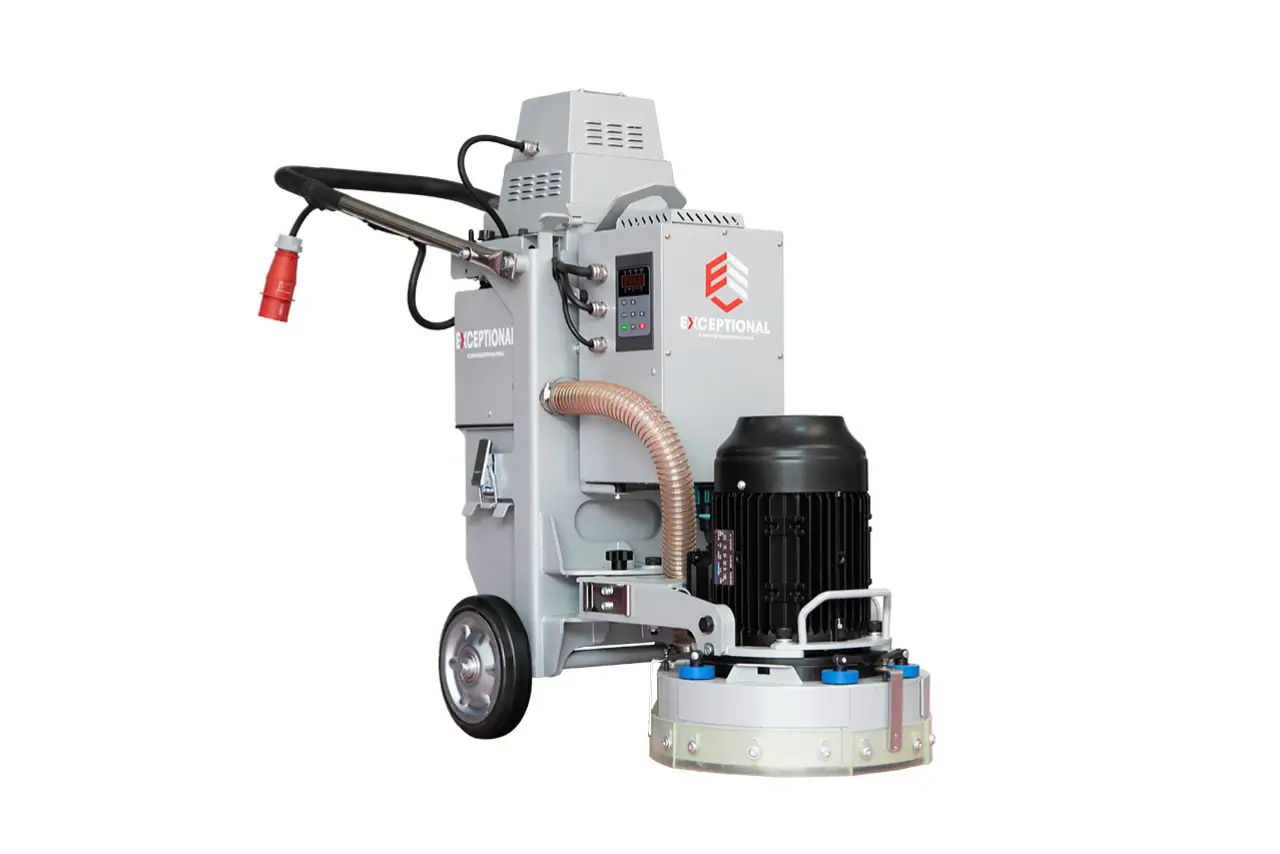
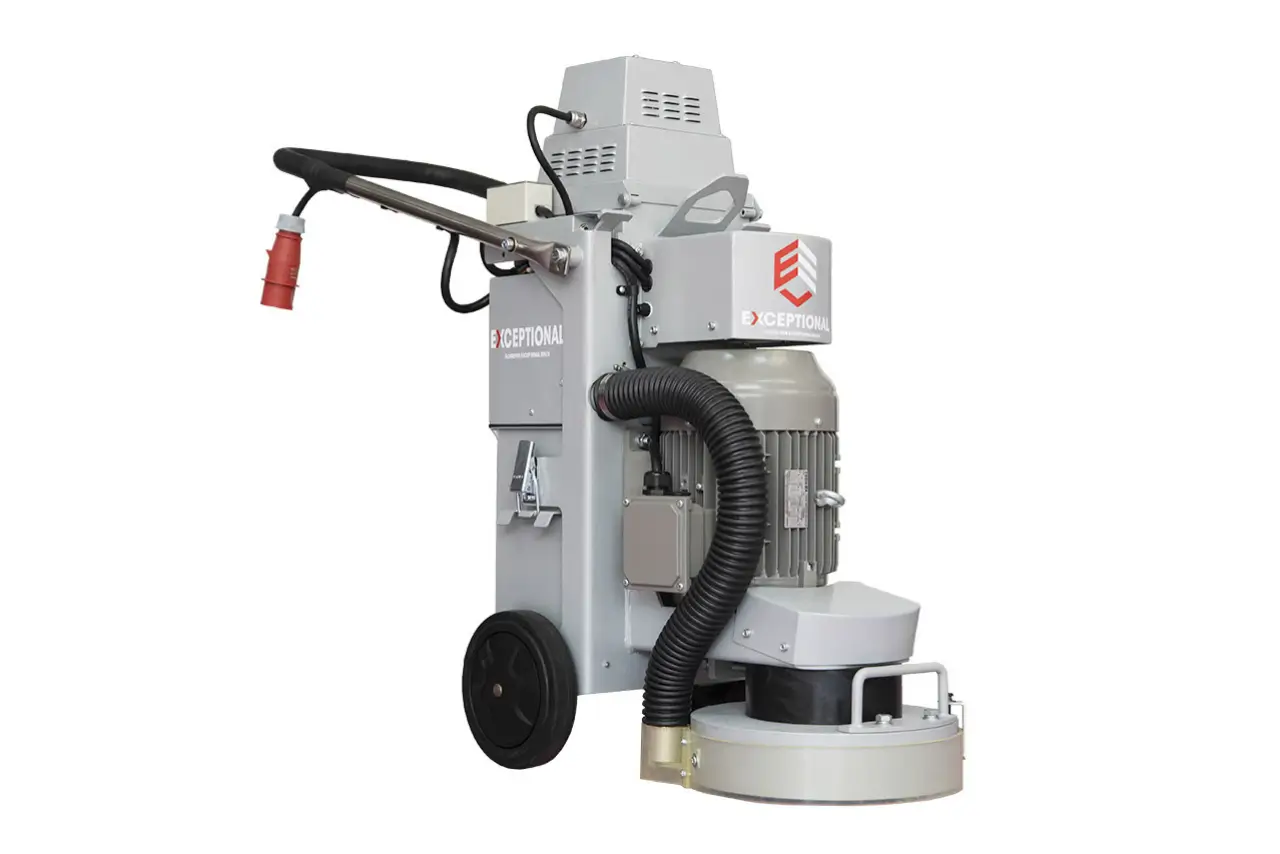
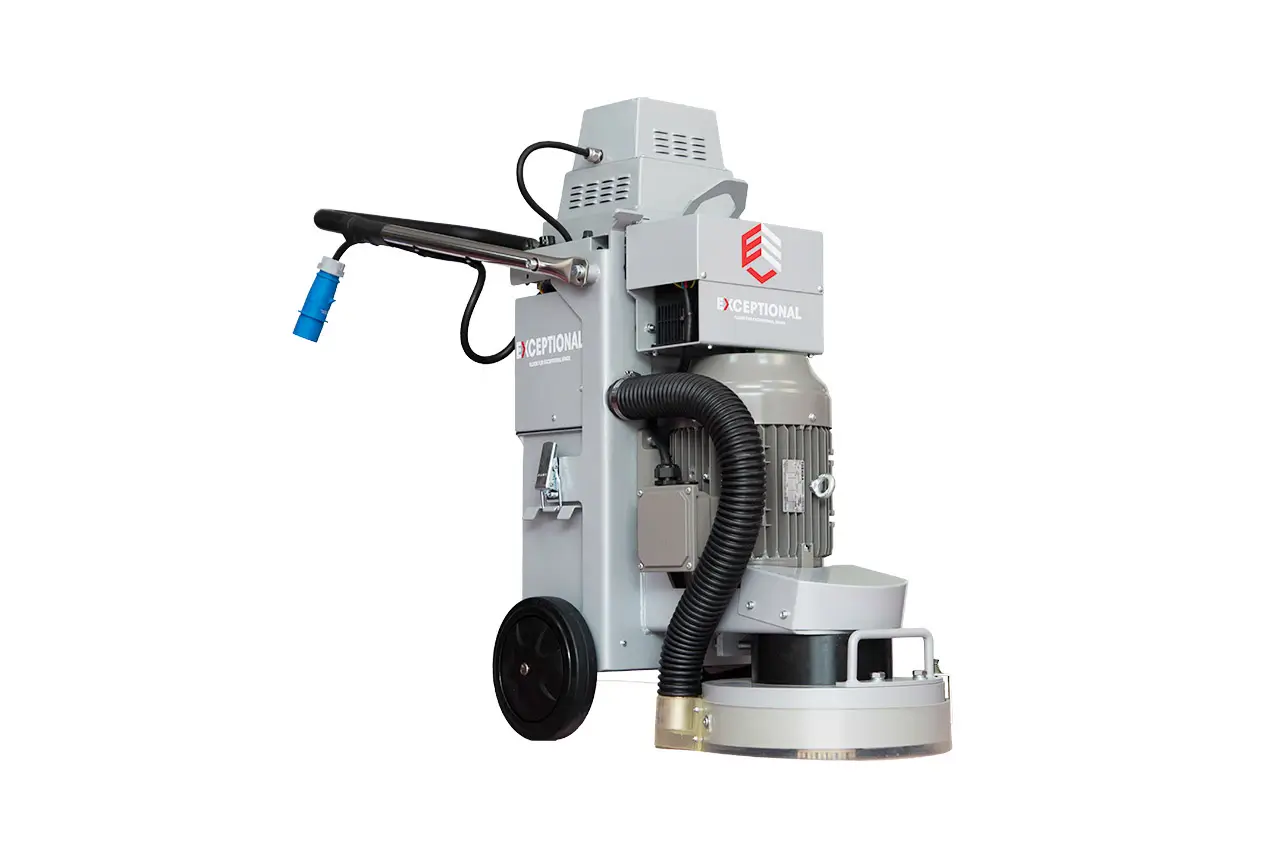
Exceptional Grinder manufactures single disc floor grinders for concrete grinding, coating removal, floor leveling, edge grinding, and surface preparation. Our product range includes 250 mm, 300 mm, and 400 mm single-head concrete grinders for flooring contractors, equipment distributors, rental companies, and industrial maintenance teams.
Unlike planetary floor grinders, single-disc machines use one rotating grinding head for concentrated grinding action. Compact models offer easier maneuverability in garages, basements, corridors, and restricted areas, while higher-powered models handle demanding concrete surfaces and industrial flooring applications.
One key advantage of selected single-disc grinders is their single-phase electrical option, allowing operation at suitable residential or light-commercial sites without three-phase power. Other models use industrial three-phase electricity for greater motor output. As a floor grinder manufacturer in China, Exceptional Grinder supplies wholesale grinding machines with variable-speed options, integrated dust extraction, compatible diamond tools, and OEM configurations for international buyers.
What Is a Single Disc Floor Grinder?
A single disc floor grinder is a walk-behind grinding machine that uses one rotating head to remove, level, or refine concrete and other compatible floor surfaces. It is also known as a single-head floor grinder, single disc concrete grinder, or rotary concrete grinding machine.
Unlike handheld angle grinders, professional single-disc machines use a larger grinding plate fitted with diamond segments or specialized abrasive tools. They are designed for concrete surface preparation, epoxy coating removal, cement laitance removal, high-spot leveling, and floor renovation.
These machines often have a compact working footprint, making them practical for garages, small workshops, commercial buildings, corridors, and restricted working areas. Higher-powered models can also handle dense concrete, industrial floors, and demanding coating-removal projects.
Single-disc grinders are available with single-phase or three-phase electrical configurations. Compact single-phase models can be useful where industrial power is unavailable, while three-phase machines support higher motor power and demanding applications.
How Does a Single Disc Concrete Floor Grinder Work?
A single-disc concrete grinder uses an electric motor to rotate one main grinding head. Diamond tools attached to the head cut the surface as the operator guides the machine across the floor.
The grinding result depends on the machine’s motor power, rotational speed, weight, grinding pressure, diamond tooling, and floor condition.
Single Rotating Grinding Head
The grinding plate rotates around one main axis. Depending on its design, the plate may hold several diamond grinding shoes, segments, or abrasive attachments.
This direct rotary grinding action can concentrate pressure over a smaller working area. It is useful for removing concrete high spots, roughening dense surfaces, and stripping old coatings with suitable tools.
One rotating disc does not mean one diamond segment. A single grinding plate may contain several abrasive tools.
Diamond Grinding and Surface Removal
Metal-bond diamond segments cut into hardened concrete and remove weak surface layers. Specialized polycrystalline diamond (PCD) tools can strip certain epoxy coatings, adhesives, and resin-based materials.
As the rotating tools contact the surface, they remove material through mechanical abrasion. The operator makes controlled, overlapping passes until the required surface condition is achieved.
Operator Control and Grinding Pressure
Single-disc grinders can produce a noticeable steering response because of the rotating head. Operators should learn how the machine behaves with each tool configuration before starting a full project.
Machine weight, counterweights, handle position, rotational speed, and grinding pressure influence cutting performance and handling.
More weight or higher RPM does not always mean faster grinding. Proper diamond selection and a controlled test area are essential.
Key Features and Specifications of Single Disc Floor Grinders
Professional single-disc floor grinders vary in grinding width, motor power, rotational speed, electrical supply, weight, and dust-control systems.
Understanding these specifications helps contractors choose suitable machines and allows wholesale buyers to compare models for their target markets.
1. Grinding Width: 250 mm, 300 mm, and 400 mm
Grinding width affects surface coverage, maneuverability, and access to restricted areas.
Exceptional Grinder provides three main working widths within its single-disc range.
| Grinding width | Typical advantages | Recommended applications |
|---|---|---|
| 250 mm / 10 in | Narrow grinding path and concentrated cutting action | High-spot removal, localized grinding, hard concrete |
| 300 mm / 12 in | Balance between surface coverage and access | Garages, corridors, edges, indoor renovation |
| 400 mm / 16 in | Wider grinding path for greater floor coverage | Commercial floors, industrial renovation, coating removal |
A wider head covers more floor in one pass, but it may require additional working space. A narrower machine can be more convenient around columns, doorways, equipment, and other obstacles.
When comparing working widths, also check the machine’s overall dimensions and clearance around walls.
2. Motor Power and Grinding Efficiency
Motor power determines how much mechanical output a grinder can provide under suitable operating conditions.
Exceptional Grinder’s five single-disc models cover grinding motor ratings from approximately 2.2 kW to 7.5 kW.
Lower-powered models can be practical for edge grinding, smaller floor areas, and general surface preparation. Higher-powered machines are designed for demanding applications such as hardened concrete grinding, aggressive leveling, and coating removal.
Grinding efficiency also depends on diamond bond, grit size, segment design, grinding pressure, concrete hardness, and the depth of material removed.
A powerful grinder with unsuitable diamond tools may perform worse than a smaller machine equipped with the correct abrasives.
3. Fixed-Speed and Variable-Speed Control
Rotational speed affects the cutting action of diamond grinding tools.
Fixed-speed grinders provide a straightforward operating setup. They can suit contractors who regularly perform similar surface preparation tasks using standardized tooling.
Variable-speed floor grinders allow operators to adjust RPM according to the floor material, coating condition, diamond tools, and required finish.
For example, the YM-320D uses a fixed 720 RPM grinding system, while the YM-320V offers adjustable speeds from 300 to 720 RPM.
The YM-250 supports high-speed grinding up to 1,700 RPM for demanding applications. The YM-420 provides variable-speed operation up to 1,000 RPM.
The correct operating speed must remain within the approved limits of the machine and installed tooling.
4. Compact Design, Maneuverability, and Transportation
Many single-head floor grinders are more compact than large planetary grinding machines.
Their smaller working footprints can help contractors move around columns, narrow passages, entrances, and fixed equipment.
This makes them practical for residential renovations, commercial maintenance, and contractors moving between jobsites.
However, compact does not always mean lightweight. Professional single-disc grinders may weigh more than 100 kg, with higher-powered machines requiring suitable handling and transport equipment.
Buyers should check the operating weight, overall dimensions, wheel design, adjustable handles, and approved lifting points.
5. Built-In Vacuum and Dust Extraction
Dry concrete grinding can generate respirable crystalline silica dust. Effective dust control is essential for operator safety and cleaner surface preparation.
Some single-disc grinders include built-in vacuum motors, filtration systems, and dust containers. Others require a compatible external industrial dust extractor.
The Exceptional Grinder MB-300T, YM-320D, YM-320V, and YM-420 feature integrated dust-collection systems.
The YM-250 connects to a compatible external dust extractor and includes an auxiliary power socket for suitable vacuum equipment.
Integrated systems can reduce the number of separate machines and hoses on smaller jobsites. However, the dust-control arrangement must still be suitable for the application and applicable safety requirements.
6. Edge-Grinding Capability
Wall edges, columns, thresholds, and corners often require additional floor preparation.
A compact single-disc grinder can provide better access than a large grinding machine, but the outer frame and dust shroud may still prevent the tools from reaching directly against walls.
The MB-300T features a specialized zero-distance edge-grinding design with an adjustable grinding head and guide wheels.
Other models may require separate edge-grinding equipment.
Single-Phase vs. Three-Phase Floor Grinders: Electrical Power Requirements
One important advantage of selected compact single-disc floor grinders is their ability to operate on single-phase electricity, making them useful for residential and light-commercial projects where three-phase industrial power is unavailable.
Large planetary floor grinders commonly require higher motor power and three-phase electricity, especially for continuous commercial and industrial grinding.
However, the grinding-head design does not determine the electrical supply. Single-disc grinders can also use three-phase motors, while some compact planetary grinders are available in single-phase configurations.
Single-Phase Floor Grinders for Residential and Commercial Projects
Single-phase electricity is widely available in houses, garages, small workshops, and commercial properties.
In China, residential electricity generally uses 220 V at 50 Hz. In most European countries, the common supply is 230 V at 50 Hz. In the United States, residential properties typically provide 120/240 V single-phase service at 60 Hz.
A compatible single-phase floor grinder can reduce the need for specialized three-phase electrical infrastructure. This is especially valuable for renovation contractors and rental companies working at different locations.
However, a machine rated for 220–240 V does not necessarily work from an ordinary wall outlet.
A high-powered grinder may require a dedicated circuit, higher current capacity, suitable protection, and professional electrical installation. The grinder’s dust extractor must also be included when calculating the total electrical load.
Three-Phase Floor Grinders for Industrial Applications
Three-phase electrical supplies are common in factories, warehouses, industrial facilities, and large commercial buildings.
Three-phase systems support higher motor power and continuous operation. Common supply voltages include 380 V in China, 400 V in Europe, and 208 V or 480 V in the United States.
High-powered single-disc grinders and larger planetary grinders often use three-phase systems.
For example, Exceptional Grinder’s YM-320D and YM-420 use industrial three-phase configurations. Buyers must confirm the required voltage, frequency, amperage, and plug type before ordering.
Common Electrical Supply Voltages by Country
International equipment distributors should select grinder configurations according to the electrical standards of their destination markets.
| Country / Region | Common single-phase supply | Common three-phase supply | Frequency |
|---|---|---|---|
| China | 220 V | 380 V | 50 Hz |
| United States | 120/240 V | 208/240/480 V | 60 Hz |
| Canada | 120/240 V | 208/600 V | 60 Hz |
| European Union | 230 V | 400 V | 50 Hz |
| United Kingdom | 230 V | 400 V | 50 Hz |
| Australia | 230 V | 400 V | 50 Hz |
| Japan | 100 V; 200 V circuits available | 200 V; 400 V in some facilities | 50/60 Hz |
| South Korea | 220 V | 380 V | 60 Hz |
| India | 230 V | 415 V | 50 Hz |
| Brazil | 127/220 V | 220/380 V | 60 Hz |
These are representative nominal voltage systems. Actual supply arrangements vary by region, utility, building, and installation. Japan uses both 50 Hz and 60 Hz networks. Australian installations may also be described by older 240/415 V nominal values.
Voltage alone does not establish compatibility. A 220 V single-phase grinder cannot be connected to a 220 V three-phase supply without an approved configuration.
Likewise, a machine designed for 50 Hz operation should not be assumed suitable for 60 Hz unless the manufacturer approves it.
For detailed electrical guidance, read our Single-Phase vs. Three-Phase Concrete Floor Grinders Buying Guide.
Compare Exceptional Grinder Single Disc Floor Grinder Models
Exceptional Grinder offers five single-disc grinding machines covering compact edge preparation, variable-speed surface grinding, high-speed concrete removal, and industrial applications.
The main differences are grinding width, motor output, electrical configuration, tool speed, and dust-collection design.
| Model | Width | Grinding motor | Electrical configuration | Main advantage |
|---|---|---|---|---|
| YM-250 | 250 mm | 5.5 kW | Single-phase or three-phase 220 V; three-phase 380–415 V | High-speed grinding on hard concrete |
| MB-300T | 300 mm | 2.2 kW* | Single-phase or three-phase 220 V; three-phase 380–415 V | Zero-distance edge grinding |
| YM-320D | 300 mm | 3.7 kW | Three-phase 220–415 V, version-dependent | Fixed-speed industrial grinding |
| YM-320V | 300 mm | 3.7 kW | Single-phase or three-phase 220 V | Variable speed and built-in vacuum |
| YM-420 | 400 mm | 7.5 kW | Three-phase 220–480 V, version-dependent | High-power grinding with dual vacuum motors |
The MB-300T detailed technical specification lists 2.2 kW. Confirm the latest factory datasheet for the ordered configuration.
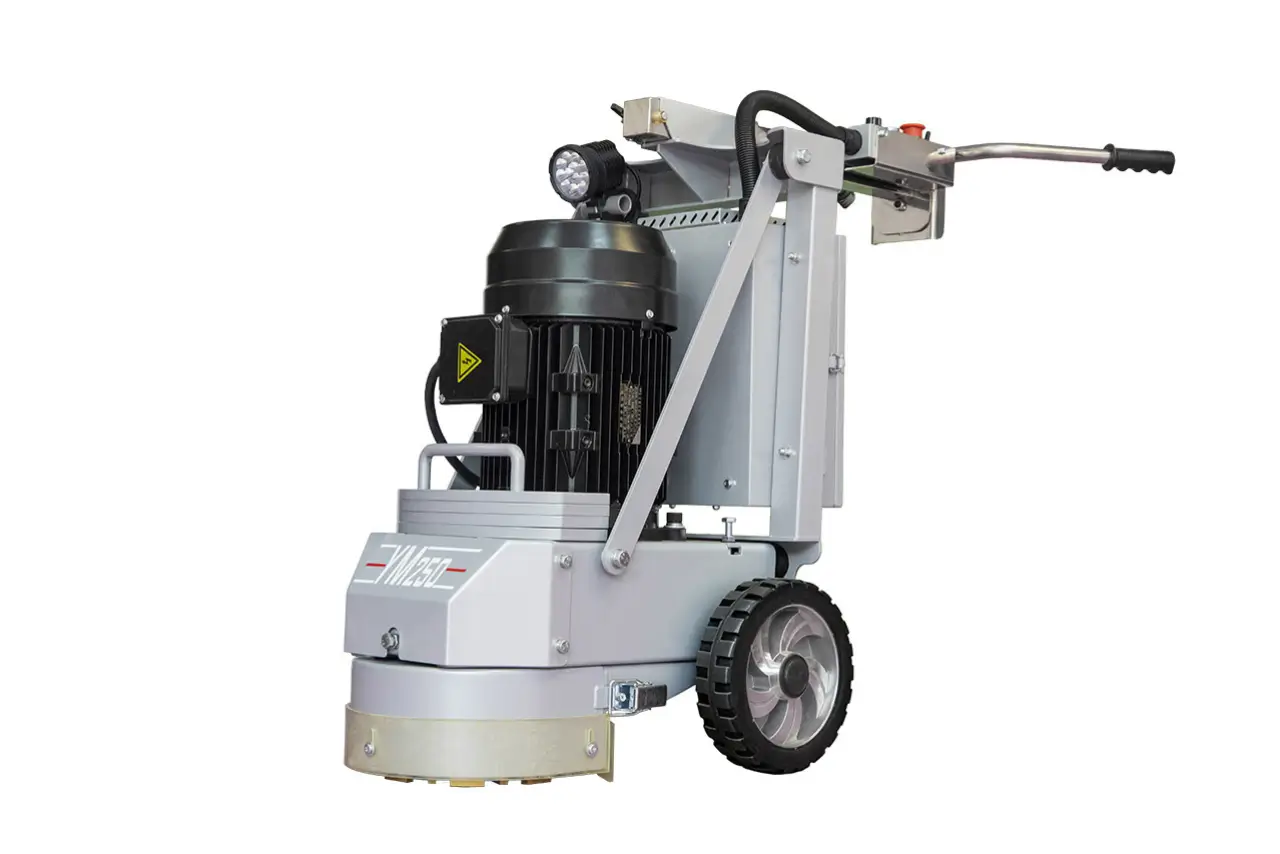
YM-250: High-Speed Single Disc Concrete Grinder
The YM-250 High-Speed Concrete Floor Grinder combines a 250 mm working width, 5.5 kW motor, adjustable grinding pressure, and rotational speeds up to 1,700 RPM.
It is designed for aggressive grinding on ultra-hard concrete, emery floors, and wear-resistant industrial surfaces.
The YM-250 is suitable for localized high-point leveling, surface roughening, and demanding coating removal.
Although a single-phase 220 V version is available, its published single-phase maximum current is 45 A. A suitable high-capacity circuit is required; it is not an ordinary household plug-in grinder.
MB-300T: Single Disc Concrete Floor Edge Grinder
The MB-300T Dust-Free Concrete Floor Edge Grinder uses a 300 mm grinding head, adjustable guide wheels, magnetic quick-release tooling, and integrated dust extraction.
Its specialized zero-distance edge-grinding system helps operators prepare concrete close to walls, columns, and other vertical structures.
Single-phase and three-phase versions are available for different electrical installations.
This model is particularly suitable for edge preparation, indoor renovation, narrow corridors, and detailed grinding work.
YM-320D: Fixed-Speed Three-Phase Concrete Grinder
The YM-320D Three-Phase Concrete Floor Grinder features a 300 mm working width, 3.7 kW grinding motor, fixed 720 RPM speed, and integrated dust collection.
It is designed for industrial jobsites with three-phase electrical supplies.
The machine is available in different three-phase voltage configurations, including 400–415 V options for international markets.
Choose the YM-320D when industrial electrical compatibility and straightforward fixed-speed operation are priorities.
YM-320V: Variable-Speed Single Disc Floor Grinder
The YM-320V Variable-Speed Concrete Floor Grinder combines a 300 mm grinding width, 3.7 kW motor, integrated 1 kW dust extractor, and adjustable 300–720 RPM operation.
Its single-phase or three-phase 220 V options provide flexibility for contractors working across different project environments.
The variable-speed system helps operators match the grinding action to concrete hardness, diamond tools, and coating-removal requirements.
This model is a practical choice for indoor concrete surface preparation, garage renovations, commercial maintenance, and restricted working areas with suitable electrical circuits.
YM-420: High-Power Single Disc Floor Grinder With Dual Vacuum
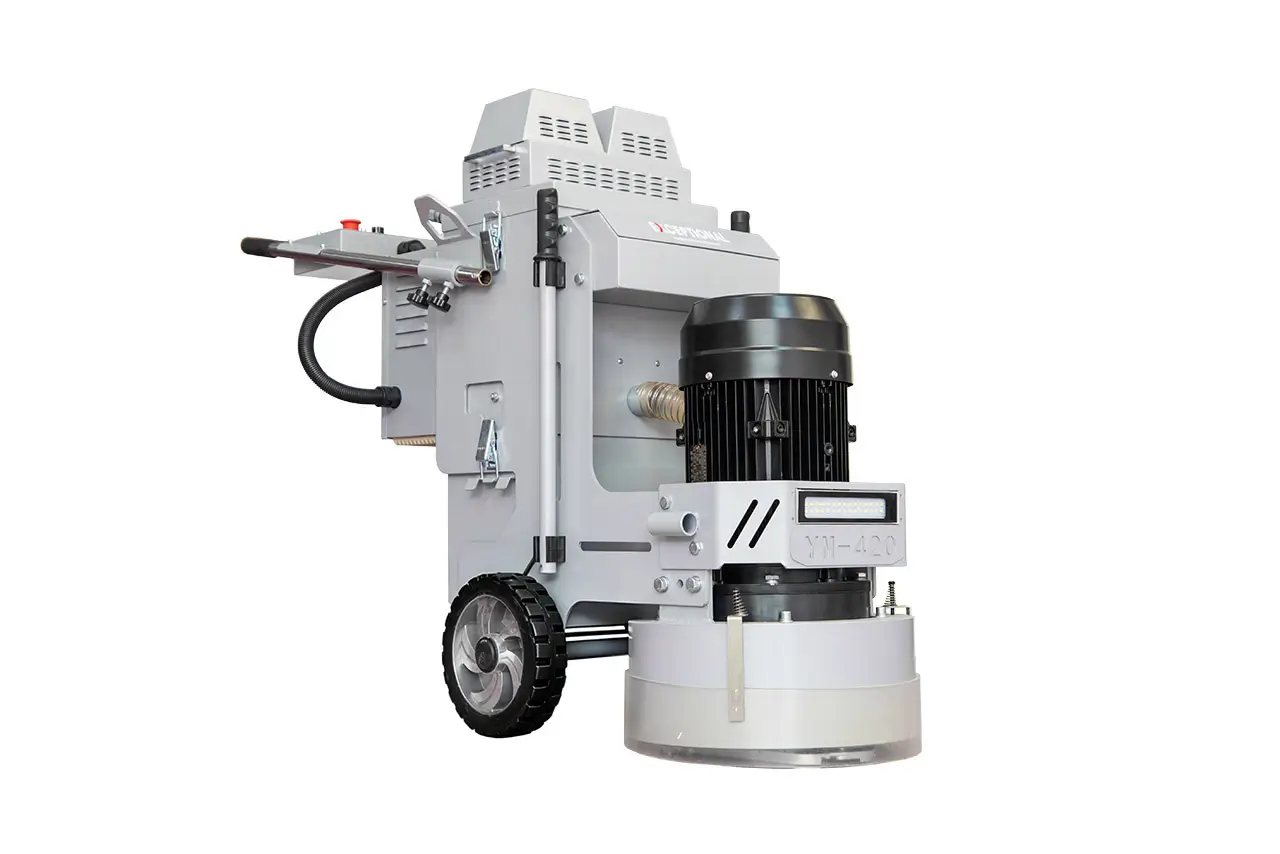
The YM-420 Industrial Concrete Floor Grinder features a 400 mm grinding width, 7.5 kW motor, adjustable speed up to 1,000 RPM, and dual integrated vacuum motors.
The machine is designed for demanding concrete grinding, coating removal, surface roughening, and compatible polishing applications.
Its 210 kg operating weight and three-phase electrical requirements place it in the professional industrial category.
The YM-420 is suitable for buyers who need more grinding power and wider coverage without moving to a large planetary machine.
Applications of Single Disc Floor Grinders
Single-disc grinders are used in residential, commercial, and industrial floor preparation. Their compact grinding systems are especially useful for localized work, restricted areas, surface correction, and coating removal.
With the correct diamond tooling, selected models can also process terrazzo, wear-resistant flooring, and compatible natural stone surfaces.
Concrete Grinding and Floor Leveling
Single-disc grinders remove minor surface irregularities, trowel marks, cement laitance, and localized high spots from hardened concrete.
They are useful for floor repairs, preparing uneven surfaces before new flooring installation, and opening dense concrete.
High-powered models, such as the YM-250, are suitable for aggressive preparation on hard or wear-resistant concrete floors.
Epoxy Coating, Paint, and Adhesive Removal
Single-disc concrete grinders can remove epoxy coatings, paint, glue, thin-set mortar, and certain polyurethane floor treatments using compatible diamond or PCD tools.
The correct abrasive depends on coating thickness, bond strength, elasticity, and substrate condition.
After coating removal, additional grinding may be required to achieve the specified surface profile for the replacement flooring system.
Garage and Residential Concrete Floor Preparation
Garages, basements, utility rooms, and residential renovations often have restricted access and limited working space.
A suitable compact single-disc grinder can help prepare concrete before epoxy garage flooring, surface repair, resurfacing, or compatible floor finishes.
For these projects, electrical compatibility is critical. Buyers should select a machine that matches the site’s available single-phase supply and circuit capacity.
Commercial and Industrial Floor Renovation
Single-disc grinding machines are also used in workshops, factories, parking structures, retail premises, and warehouses.
Applications include removing old floor treatments, roughening worn concrete, reducing surface imperfections, and preparing floors for recoating.
High-powered industrial single-disc models can handle demanding local grinding work, although larger planetary machines may offer better overall productivity on extensive open floors.
Concrete Edge Grinding and Restricted Areas
Wall edges, columns, thresholds, and permanent equipment can limit access for large grinders.
Compact single-disc machines and dedicated edge grinders help prepare these areas.
The MB-300T provides specialized close-to-wall grinding, reducing the amount of additional work required along floor perimeters.
Terrazzo and Stone Surface Restoration
Selected single-disc machines can be used for terrazzo restoration and compatible stone surface grinding.
The abrasive system should match the material and required finish. Coarse diamond tools remove surface imperfections, while approved finer abrasives refine scratches.
Not every single-disc concrete grinder is designed for complete high-gloss stone polishing.
Single Disc vs. Planetary Floor Grinders: Which Should You Choose?
Single disc floor grinders and planetary floor grinders differ in grinding mechanism, working width, power requirements, handling, and typical applications.
A single-disc grinder uses one rotating grinding head. A planetary grinder uses several smaller tool heads rotating within an orbiting grinding system.
These designs provide different advantages depending on project size, material removal, surface finish, and available electrical power.
| Feature | Single Disc Floor Grinders | Planetary Floor Grinders |
|---|---|---|
| Grinding mechanism | One main rotating head | Multiple rotating satellite heads |
| Motor power | Often lower on compact models; higher-power options available | Often higher on large industrial models |
| Electrical supply | Single-phase or three-phase | Three-phase common on large machines; compact single-phase options exist |
| Residential power compatibility | Available on selected single-phase models with suitable circuits | Available on some smaller single-phase models |
| Working width | Commonly narrower; Exceptional models cover 250–400 mm | Often wider for commercial and industrial models |
| Grinding pressure | Can concentrate cutting pressure over one head | Distributed across several grinding heads |
| Maneuverability | Compact models are practical in restricted areas | Depends on machine size and control system |
| Surface leveling | Localized high-spot removal and surface correction | Broad-area leveling and controlled refinement |
| Coating removal | Effective with suitable diamond or PCD tools | Effective with compatible tools |
| Concrete polishing | Possible on selected models | Often preferred for multi-stage polishing |
| Large-area productivity | Smaller paths may require more passes | Larger paths can improve open-floor coverage |
| Typical applications | Garages, repairs, edges, coating removal | Warehouses, large floors, decorative polishing |
When Is a Single Disc Floor Grinder Better?
Choose a single-disc floor grinder when the work involves smaller or restricted areas, localized surface correction, edge preparation, coating removal, or frequent movement between jobsites.
A suitable single-phase model can also be useful when industrial three-phase power is unavailable.
Single-disc grinders may provide strong material-removal performance on difficult concrete, especially when their tool pressure and diamond tooling are matched to the floor.
When Is a Planetary Floor Grinder Better?
Planetary floor grinders are commonly preferred for large commercial floors, industrial polishing, decorative concrete finishing, and projects requiring consistent scratch refinement over wide areas.
Their multiple grinding heads and overlapping grinding paths support controlled surface finishing.
Larger planetary models often use higher-powered three-phase motors for sustained industrial operation.
Explore Exceptional Grinder’s Planetary Floor Grinders for wide-area concrete grinding, surface preparation, and polishing applications.
Can Single Disc and Planetary Grinders Work Together?
Yes. Professional flooring contractors may use both types on the same project.
A large planetary grinder can process the main floor area, while a compact single-disc or dedicated edge grinder handles restricted spaces, perimeter areas, and localized corrections.
This combination can improve the overall workflow by matching each machine to the area where it performs best.
Diamond Grinding Tools for Single Disc Floor Grinders
The grinding machine provides the power, but the diamond tools determine how that power is applied to the floor.
Single-disc grinders use compatible grinding plates, metal-bond diamonds, PCD tools, and other approved abrasives.
| Diamond tool | Main purpose | Typical application |
|---|---|---|
| Metal-bond diamond segments | Concrete cutting and leveling | Laitance removal, high spots, surface opening |
| PCD grinding tools | Removing compatible coatings | Epoxy, adhesives, resin coatings |
| Hybrid diamond abrasives | Transitional surface refinement | Reducing coarse grinding scratches |
| Resin-bond polishing pads | Fine grinding and polishing | Concrete and terrazzo finishing |
Diamond Bond and Grit Selection
Concrete hardness affects how quickly grinding segments wear and expose fresh diamond particles.
Hard concrete generally requires a softer metal bond to maintain cutting action. Soft or abrasive concrete normally requires a harder bond to reduce premature tool wear.
Coarse grits are used for aggressive removal, while medium and fine grits support surface refinement.
For example, #16–#30 metal-bond tools are often used for coarse grinding, #40–#80 for general grinding and scratch reduction, and finer grades for compatible refinement stages.
These are general selection ranges, not fixed requirements for every project.
Tool Holder and RPM Compatibility
Before ordering grinding tools, confirm the disc mounting pattern, segment quantity, rotation direction, maximum permitted speed, and tool dimensions.
Some machines use magnetic quick-change systems, while others require bolted or machine-specific grinding plates.
A tool that physically fits the grinder is not automatically approved for its operating speed.
Explore our Diamond Tools or read How to Choose Diamond Grinding Tools for Concrete Floors.
Concrete Surface Profile and Silica Dust Control
Correct concrete floor preparation requires more than removing visible coatings.
The finished substrate must have the cleanliness, strength, and surface texture required by the next flooring system.
Concrete Surface Profile (CSP)
The International Concrete Repair Institute (ICRI) provides guidance for selecting concrete surface preparation methods.
ICRI Guideline 310.2R describes the Concrete Surface Profile (CSP) system, which uses reference profiles from CSP 1 to CSP 10.
Grinding often creates relatively smooth surface profiles, while shot blasting, scarifying, and other preparation methods can produce more aggressive textures.
The required CSP depends on the epoxy coating, sealer, repair mortar, or overlay manufacturer’s specifications.
Do not assume that aggressive coating removal automatically creates the correct bonding profile.
For more information, read Concrete Floor Surface Preparation Standards: ICRI, ASTM, AMPP, ACI & EN.
Respirable Crystalline Silica and Dust Extraction
Dry grinding concrete can release fine dust containing respirable crystalline silica.
The U.S. Occupational Safety and Health Administration (OSHA) regulates construction exposure under 29 CFR 1926.1153.
For walk-behind floor grinders, OSHA Table 1 identifies specified dust-control methods, including approved water-delivery or manufacturer-recommended dust-collection systems.
When using the dust-collection option, the system must provide the required airflow, filtration efficiency, and filter-cleaning capability.
An onboard vacuum does not automatically establish OSHA compliance. The complete equipment setup and operating method must meet the applicable requirements.
Source: OSHA Respirable Crystalline Silica Standard.
How to Choose the Best Single Disc Floor Grinder
The best single-disc floor grinder is the one that matches the actual floor, project size, electrical supply, diamond tooling, and working conditions.
Contractors and wholesale buyers should evaluate the complete equipment configuration rather than comparing motor power or purchase price alone.
1. Match the Grinding Width to Your Project
Choose the working width according to the available space, floor area, obstacles, and required coverage.
A 250 mm grinder may suit concentrated grinding and localized preparation. A 300 mm model offers a balance between maneuverability and surface coverage. A 400 mm grinder provides a wider working path.
Measure entrance widths, transport routes, and perimeter clearance before selecting equipment.
2. Check Single-Phase or Three-Phase Power Availability
Electrical compatibility is one of the most important factors.
For residential or small commercial projects, a suitable single-phase grinder can avoid the need for three-phase industrial electricity.
For factories and warehouses with established three-phase electrical supplies, industrial grinders may offer more suitable motor configurations.
Always confirm voltage, frequency, phase, amperage, circuit capacity, grounding, and plug requirements. Include integrated or external vacuum equipment in the electrical assessment.
A standard household outlet must not be assumed adequate simply because the machine is described as single-phase.
3. Evaluate Motor Power, RPM, and Grinding Pressure
Higher motor power can support demanding grinding loads, but it does not guarantee faster project completion.
Compare motor output with working width, grinding pressure, speed control, and intended applications.
A variable-speed machine may be more useful when operators work with different surfaces or diamond tools.
4. Select the Correct Diamond Tools
Choose diamond bond, grit, segment design, and coating-removal tools according to the actual floor.
Hard concrete, soft concrete, epoxy coatings, adhesives, and terrazzo require different tool characteristics.
Always confirm the mounting system and approved operating speed.
5. Compare Built-In and External Dust Extraction
For indoor projects, effective dust collection is essential.
Integrated vacuum systems may simplify transportation and reduce separate equipment on smaller jobsites.
External industrial dust extractors can provide alternative filtration, airflow, and dust-handling arrangements.
Compare the complete dust-control setup rather than selecting equipment solely because the product name includes “dust-free.”
6. Consider Floor Area and Grinding Productivity
A compact grinder may be efficient in a garage or restricted working area but require more passes across an open warehouse.
Grinding capacity depends on coating thickness, concrete hardness, tool wear, removal depth, operator skill, and the final surface requirements.
For accurate productivity estimates, test the machine on a representative floor area.
Avoid relying on a universal square-meter-per-hour figure.
7. Evaluate Maintenance and Total Ownership Cost
Professional buyers should consider purchase price, tool consumption, spare parts, transport, power requirements, operator training, and after-sales support.
For rental companies, straightforward operation, maintenance access, durable components, and replacement-part availability are especially important.
For distributors, consistent electrical configurations, technical documentation, and spare-parts packages can reduce long-term service costs.
Read our Concrete Floor Grinder Buying Guide for a broader equipment selection framework.
Wholesale Single Disc Floor Grinders Manufacturer in China
Exceptional Grinder supplies professional single disc floor grinders for international contractors, equipment distributors, rental companies, flooring businesses, and industrial maintenance teams.
Our product range includes high-speed concrete grinders, dedicated edge-grinding machines, variable-speed models, and industrial grinders with integrated dust extraction.
We support buyers with model selection, voltage configurations, compatible diamond tools, accessories, spare parts, and selected OEM and ODM options.
OEM and Wholesale Floor Grinder Solutions
Depending on the model and order requirements, available services may include customer branding, machine colors, electrical configurations, compatible accessories, and spare-parts packages.
International distributors should confirm the destination country’s electrical standards and applicable machinery compliance requirements before ordering.
For a more accurate quotation, provide the required model, quantity, destination market, available power supply, floor material, coating type, and intended application.
Frequently Asked Questions About Single Disc Floor Grinders
What is a single disc floor grinder used for?
A single disc floor grinder is used for concrete grinding, surface leveling, coating removal, cement laitance removal, floor roughening, and localized repairs. With suitable diamond tools, selected machines can also perform terrazzo and stone surface preparation.
What is the difference between a single disc floor grinder and a planetary grinder?
A single-disc grinder uses one main rotating head, while a planetary grinder uses multiple rotating heads within an orbiting system. Single-disc machines often suit localized grinding and restricted areas. Larger planetary machines are commonly used for wide-area preparation and multi-stage polishing.
Can a single disc floor grinder run on household electricity?
Yes, selected single-disc grinders operate on single-phase electrical supplies. However, the available circuit must support the machine’s rated voltage and current. A high-powered 220 V grinder may need a dedicated circuit rather than a standard household outlet.
Do planetary floor grinders always require three-phase electricity?
No. Some compact planetary grinders use single-phase power. However, larger industrial planetary machines commonly require three-phase electricity to support higher motor output and continuous grinding.
What voltage should I choose when importing floor grinders from China?
Choose a configuration that matches the destination country’s electrical supply and the intended jobsite. China commonly uses 220 V single-phase and 380 V three-phase power. Europe typically uses 230/400 V, while the United States commonly uses 120/240 V single-phase and several three-phase industrial systems. Confirm voltage, phase, frequency, current, and plug type before ordering.
Are single disc floor grinders lightweight and portable?
Some models are compact and easier to maneuver than large planetary grinders, but professional single-disc machines can still be heavy. Check the operating weight, dimensions, transportation method, and lifting requirements before purchasing.
Which grinding width is best: 250 mm, 300 mm, or 400 mm?
A 250 mm grinder is useful for concentrated grinding and localized work. A 300 mm machine balances access and coverage. A 400 mm grinder offers a wider working path for commercial and industrial preparation. The best option depends on the floor and project requirements.
Can a single disc floor grinder remove epoxy coatings?
Yes. With compatible diamond grinding segments or approved PCD tools, single-disc grinders can remove many epoxy coatings, paints, and adhesive residues. Thick or strongly bonded coatings may require more aggressive tooling or another preparation method.
Can a single disc grinder polish concrete?
Selected machines can refine and polish compatible concrete surfaces using approved abrasives. However, not every single-disc preparation grinder is a complete polishing system. Planetary grinders are often better suited to large, multi-stage decorative concrete polishing projects.
Can single disc floor grinders grind directly against walls?
Not all models. Grinding access depends on the machine’s frame, head design, and dust shroud. Dedicated edge grinders such as the MB-300T are designed to work close to walls and reduce unground perimeter strips.
How much concrete can a single disc floor grinder grind per hour?
Grinding productivity varies by machine, floor hardness, coating thickness, diamond tooling, removal depth, and operator technique. A representative onsite test gives a more reliable production estimate than a general capacity figure.
Do single disc concrete grinders need dust extraction?
Dry concrete grinding requires suitable dust controls because the process can generate respirable crystalline silica. Some machines include integrated vacuum systems, while others require an approved external dust extractor. Follow applicable workplace safety requirements.
What diamond tools should I use with a single disc concrete grinder?
Metal-bond diamond segments are commonly used for concrete grinding and leveling. Approved PCD tools can remove certain coatings and adhesives. Finer diamond abrasives support surface refinement. Tool selection must match the floor material, grinding head, and permitted operating speed.
What should distributors check when buying single disc floor grinders wholesale?
Confirm motor specifications, electrical configuration, product documentation, applicable certifications, diamond-tool compatibility, standard accessories, warranty terms, replacement parts, packaging, and after-sales support. A complete technical specification should form part of the purchase agreement.
Request a Wholesale Single Disc Floor Grinder Quote
Looking for a reliable single disc floor grinder manufacturer in China?
Exceptional Grinder supplies professional concrete grinding machines, compatible diamond tools, and selected OEM solutions for flooring contractors and international distributors.
Contact Exceptional Grinder to compare equipment configurations, discuss your surface preparation project, and request a factory-direct quotation.